
How to measure marketing performance (without getting lost in the numbers)
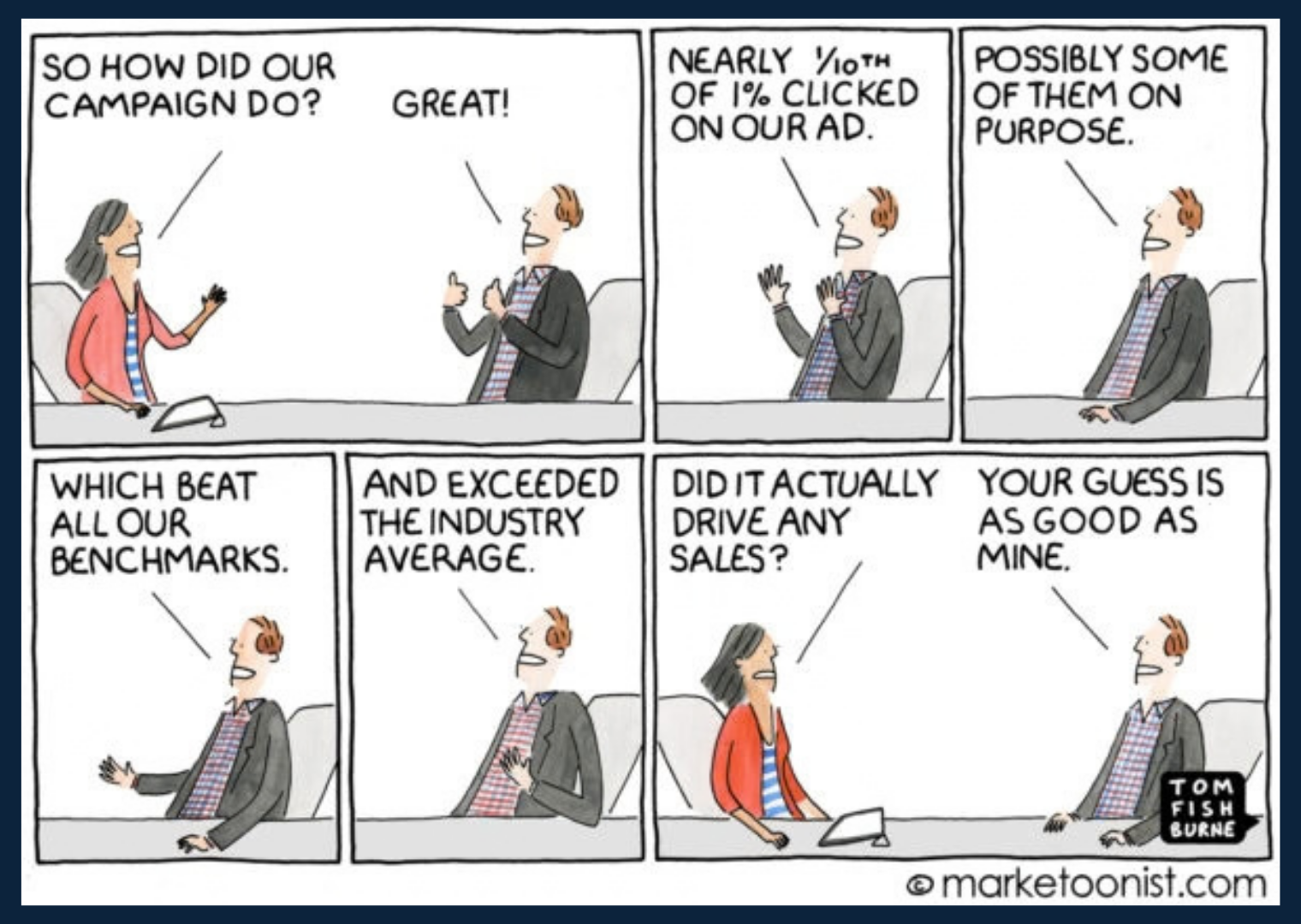
So your marketing team has been busy. Content is getting published, LinkedIn engagement is up, website traffic is growing, and the monthly report is looking pretty darn good. Then someone in the leadership meeting asks the million-dollar question:
“Okay, but what is all of this actually doing for the business?”
Fair question.
You can pull up impressions, clicks, leads and about 47 different dashboards, but connecting all that activity to business growth? That's where things get a little tricky.
And when marketing can't demonstrate its value to the C-suite, budget tends to be the first thing on the chopping block.
In fact, Gartner's 2026 Brand and Business Strategy Survey found that 84% of companies are stuck in what it calls the Brand Doom Loop. Poor measurement erodes confidence in brand investment, budgets get cut, and proving brand value becomes even harder. Sound familiar?
The good news is that you don't need a ridiculously complicated reporting system or perfect attribution to make a stronger case for marketing. You need to know what you're trying to achieve, which indicators matter and how they connect to the bigger picture.
So, let's get into it.
Why measuring B2B brand marketing is so complicated
Here's a scenario we see all the time.
A potential customer sees one of your founder's LinkedIn posts. A few weeks later, they read an article on your website. Somewhere along the way, a colleague mentions your company. Fast-forward a few months and they're ready to buy, so they Google your business, click the ads link at the top of the page, and then submit an inquiry. Your analytics report credits the conversion to paid search.
Cool. But what about everything that happened before that?
According to MarketScale's State of B2B Marketing, 70% of the B2B buying journey is complete before a buyer contacts sales. That means a significant portion of the research and consideration happens before your sales team even knows a potential customer exists.
And that's what makes B2B marketing measurement a little more nuanced. Buyers rarely follow a neat, trackable path to purchase. Multiple stakeholders, long consideration periods and interactions outside your reporting software all influence the decision. But your CRM probably isn't going to capture that someone mentioned you over coffee, and that's a simplified way to explain the limitation of attribution. It captures trackable interactions, but it can't always tell you everything that influenced the buyer.
There's also the issue of timing. The widely cited 95-5 Rule from LinkedIn's B2B Institute suggests that most potential B2B buyers are out of market at any given time, meaning much of your marketing is reaching people who won't be ready to buy for months, or even years. So if you're judging every marketing activity by how much pipeline it generated in the last 30 days, you're missing a pretty big piece of the puzzle.
And that's how businesses can end up in the Brand Doom Loop. Marketing struggles to prove its value, leadership questions the investment, budgets shrink, and the cycle repeats. So what’s the way out?
It starts with building a clearer picture of how marketing helps people discover your business, get familiar with your brand, and eventually become customers. Easier said than done, but there is a way.
Align marketing measurement with your business goals
Before you start pulling reports, get clear on what you're measuring for. For example, a business breaking into a new market needs a different scorecard than one focused on generating more qualified inbound leads.
Are you trying to build awareness, attract larger customers, reduce your reliance on referrals, or create a more predictable pipeline? Your goals should determine which marketing performance indicators deserve the most attention.
If awareness is the priority, target-market reach and search visibility matter. If you're trying to improve lead quality, pay closer attention to the opportunities coming through your CRM.
And please, don't feel like you need some fancy enterprise reporting platform to get started. A lean team can learn plenty from Google Analytics, Search Console, social analytics and a good old-fashioned spreadsheet.
Start with what you have, establish a baseline, and choose a handful of meaningful indicators. You can tack on complex reporting tools and attribution software later.
What marketing performance indicators should you track?
Alright, let's get into the numbers.
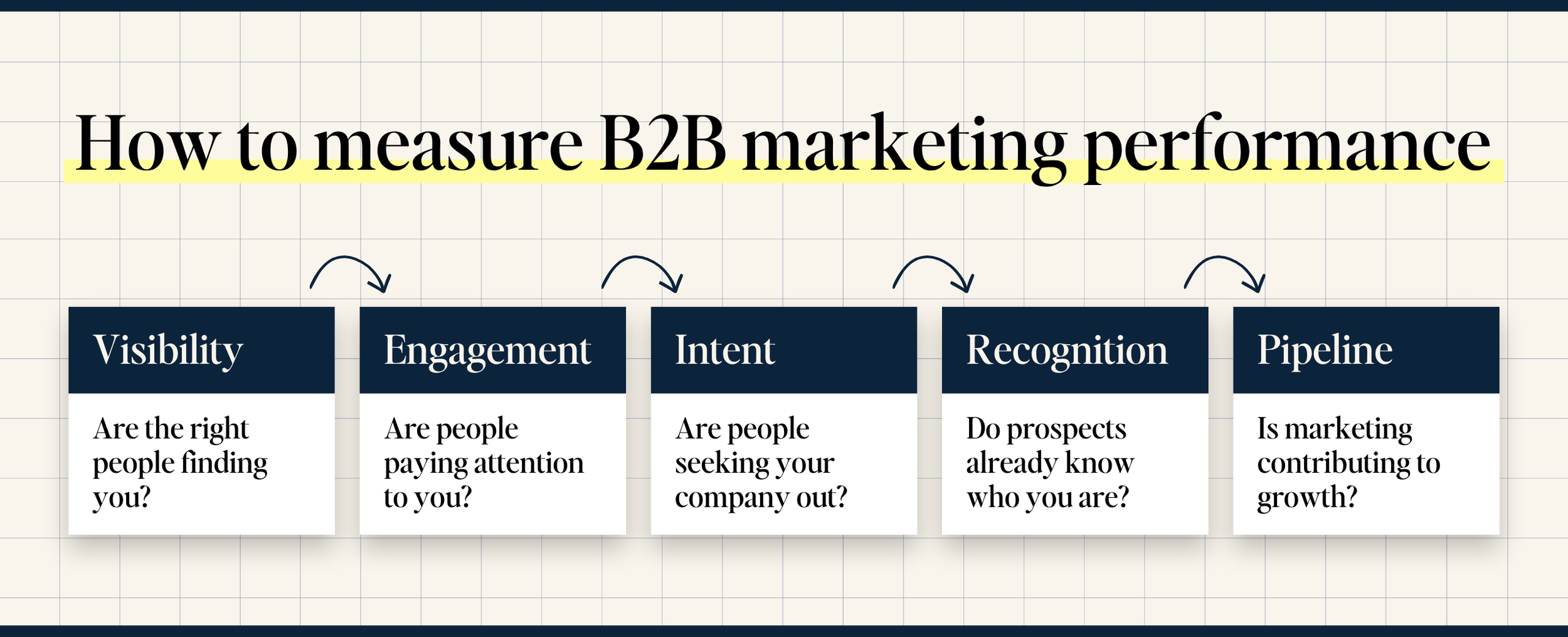
At Outspoke, we look at five connected areas to understand how marketing is contributing to business growth. These marketing metrics give us a clearer picture of how an audience moves from discovering a company to becoming a customer.
1. Visibility: are the right people finding you?
Before someone can buy from you, they need to know you exist. Groundbreaking, we know.
That's where brand measurement metrics like reach and search visibility come in. They help you understand whether the right people are discovering your business.
What to track:
Reach and impressions within your target audience
Search visibility and referral traffic
Relevant industry mentions and AI search visibility
The key phrase is within your target audience.
Fifty thousand impressions might look impressive, but if they're coming from people who will never buy from you, they're probably not helping much. We'd rather see a smaller audience made up of the decision-makers and companies you're trying to reach.
And with AI becoming another way buyers discover vendors, it's worth tracking whether your brand appears in relevant AI-generated recommendations. We've put together a guide to building brand visibility in AI search if you want to dig into that side of things.
2. Engagement: are people paying attention?
Getting in front of your audience is one thing. Giving them a reason to stick around is another.
What to track:
Meaningful comments, shares and saves
Video watch time
Returning website visitors, time spent on website, and # of pages visited
Email opens, clicks, and replies
This is a good moment to pause and address the whole vanity metrics debate.
Sure, a LinkedIn ‘like’ isn't going to pay your bills. But a thoughtful comment from someone in your target market or a prospect returning to read multiple articles can indicate that your marketing is resonating. Look at who's engaging, what they're engaging with, and whether those patterns are changing over time. Context matters.
3. Intent: are people actively seeking you out?
This is where people start moving beyond passively encountering your brand and taking steps to learn more.
What to track:
Branded search volume
Direct and returning website traffic
Visits to service and case-study pages
Info requests and inbound inquiries
Let's say branded search starts climbing. More people are returning to your website, and visits to your service pages are increasing. One spike doesn't prove much, but when several indicators move together, you're getting a clearer picture of growing interest.
4. Recognition: do prospects already know who you are?
Some of your most useful marketing insights won't come from a dashboard. They'll come from your sales team.
“I've been following your company on LinkedIn.”
“Someone on my team sent me your article.”
“I've heard good things about you.”
These are clues that your marketing may have influenced a prospect long before they reached out. And while they might not show up in your analytics, you can still find ways to capture them.
What to track:
How prospects first heard about your business
Whether prospects were familiar with your brand before reaching out
Mentions of your content, referrals or other brand touchpoints during sales conversations
Start by adding a “How did you hear about us?” field to your inquiry form and asking your sales team to record these insights in your CRM. Self-reported attribution isn't perfect, but it helps fill in gaps your analytics can't capture.
5. Pipeline: is marketing contributing to growth?
Alright, now we're getting to our holy grail of marketing metrics. The numbers that show whether all that visibility, engagement and brand-building are translating into business growth.
What to track:
Qualified inbound leads and lead quality
Marketing-sourced and marketing-influenced opportunities
Pipeline and revenue growth against business goals
This is where marketing and sales need to be talking. Your CRM might show that inbound leads are increasing, but are they the right leads? Are they coming from companies that fit your ideal customer profile? Are they turning into qualified opportunities?
Because 100 inquiries from people who can't afford your services probably aren't as valuable as 10 from companies that are a great fit.
Then, follow those opportunities through the sales pipeline. How much pipeline is marketing generating or influencing? How many of those opportunities are turning into customers, and what revenue are they bringing in? This is where you start connecting your marketing investment to the business outcomes that matter most.
Connect the dots between marketing activity and business results
Here's where it all comes together.
Imagine you're reviewing marketing performance over two quarters. Your reach among target accounts is growing. Branded search is trending upward, more people are returning to your website, and sales is hearing from prospects who already know your company. Meanwhile, qualified inbound pipeline is increasing.
Can you prove that a specific LinkedIn post generated a particular deal? Probably not. But together, those indicators give you a much stronger picture of marketing's contribution than reporting on impressions alone. And when results stall, the same indicators help you figure out where to investigate.
For example:
Visibility is growing, but engagement is flat? Review your audience, messaging and content.
Engagement is healthy, but intent is low? Look at whether your content connects to the problems your business solves.
Inbound leads are increasing, but pipeline isn't? Work with sales to investigate lead quality and targeting.
These are starting points for better questions, rather than automatic diagnoses. Once you know which indicators matter, bring them together in a simple scorecard your team can review consistently.
Build a marketing measurement scorecard
You don't need a dashboard with 75 widgets to understand whether marketing is doing its job.
Here's a simple scorecard to get started:
| Business question | What to track | Where to find it |
|---|---|---|
| Are the right people finding us? | Target-market reach, search visibility | Social, Search Console |
| Are they paying attention? | Engagement, returning visitors | Social, GA4, email |
| Are they showing intent? | Branded search, inquiries | Search Console, GA4, CRM |
| Do prospects recognise us? | How they heard about you | CRM, sales notes |
| Is marketing contributing to growth? | Qualified leads, pipeline, revenue | CRM, sales |
Establish a baseline using three to six months of historical data where possible, then review your scorecard consistently.
Monthly: Look at visibility, engagement and early intent signals to identify what needs attention.
Quarterly: Review how those signals are changing alongside lead quality, pipeline and sales feedback.
Over your full sales cycle: Look at how earlier marketing activity may be contributing to opportunities and revenue.
Remember, your customers don't necessarily buy on your reporting schedule. If your sales cycle is six months, expecting every marketing investment to generate revenue within 30 days is going to create some misleading conclusions. The goal is to give marketing a fair measurement window while still making informed decisions along the way.
Make your marketing numbers mean something
At the end of the day, marketing measurement should help you make better business decisions. It should show you where your marketing is gaining traction, where prospects are getting stuck, and whether your investment is contributing to the outcomes that matter. And when budget season rolls around, you'll have something more useful to bring to the table than a collection of disconnected metrics and a hopeful “trust us, brand matters.”
Start with your business goals, choose a few meaningful indicators, and look at how they connect over time. Because building a strong brand takes time, and building a case for continued investment shouldn't feel impossible.
Is your marketing doing what you need it to do?
At Outspoke, we help growing B2B businesses get clear on their marketing priorities, build their brand and content engines, and understand what’s working, so they can make better decisions about where to spend their time and budget.
